Custom Metadata Fields and Folder Templates
Folderit allows authorized users to create custom metadata fields for files, folders, and external links. These fields can be added individually or applied automatically through a folder-level metadata template.
Custom metadata makes it possible to capture information specific to your organization, such as contract type, customer name, invoice amount, project status, department, review date, or any other structured value you need.
Users require the appropriate account-level Manage Metadata permission to create and manage custom metadata fields. Learn more about granting account-level permissions.
Create a folder-level metadata template
A folder-level metadata template automatically adds predefined fields to new resources placed in a folder. This helps ensure that files, folders, and links are described consistently.
- Open the folder where you want to configure the metadata template.
- Click Meta in the toolbar.
- Click the + button below the field-name column.
- Select an existing custom metadata field from the list, or click the additional + option to create a new field.
- Configure whether the field is required, recursive, and applicable to files, folders, links, or a combination of these resource types.
- Add any additional fields required for the template.
- Save the folder metadata configuration.

Create a custom metadata field
When creating a new custom field, enter its name, an optional description, and the appropriate data type.
Available field types include:
- String — a short text value;
- Long text — a longer description or note;
- Checkbox — a yes-or-no value;
- Date — a calendar date;
- Datetime — a date and time;
- Time — a time value;
- Integer — a whole number;
- Decimal — a number containing decimal places;
- List — a predefined set of selectable options;
- Email — an email address;
- URL — a web address;
- User — a Folderit user;
- Entity — a structured entity value.
When using the List field type, remember to define the available list options before saving the field.
Required, Recursive, and Include settings
Required
Enable Required when users must complete the field while modifying the resource’s metadata.
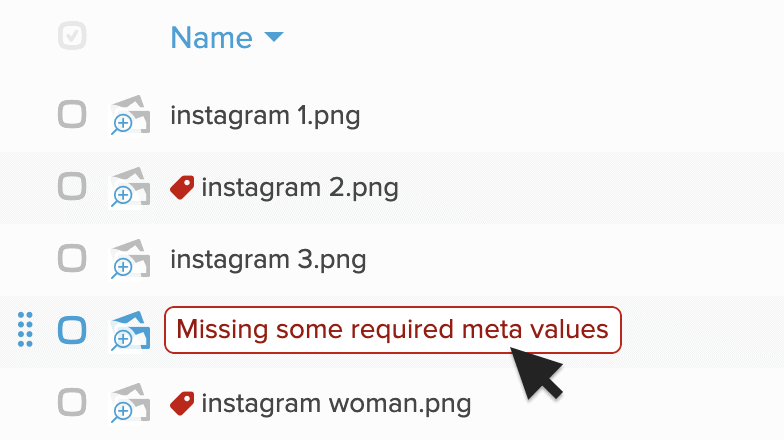
Resources with missing required values are marked in the list or thumbnail view. Clicking the warning opens the Modify view so the missing information can be completed.
Recursive
Enable Recursive to apply the custom field to the selected folder and its subfolders.
Recursive templates are useful when an entire branch of the folder structure should use the same metadata requirements.
Include
Use the Include settings to choose which resource types receive the field:
- files;
- folders;
- external links;
- any combination of these resource types.
Each metadata field in a folder template can have its own Required, Recursive, and Include configuration.
Manage all custom metadata fields
Account administrators can review centrally defined custom metadata fields under Admin Tools → Metadata.
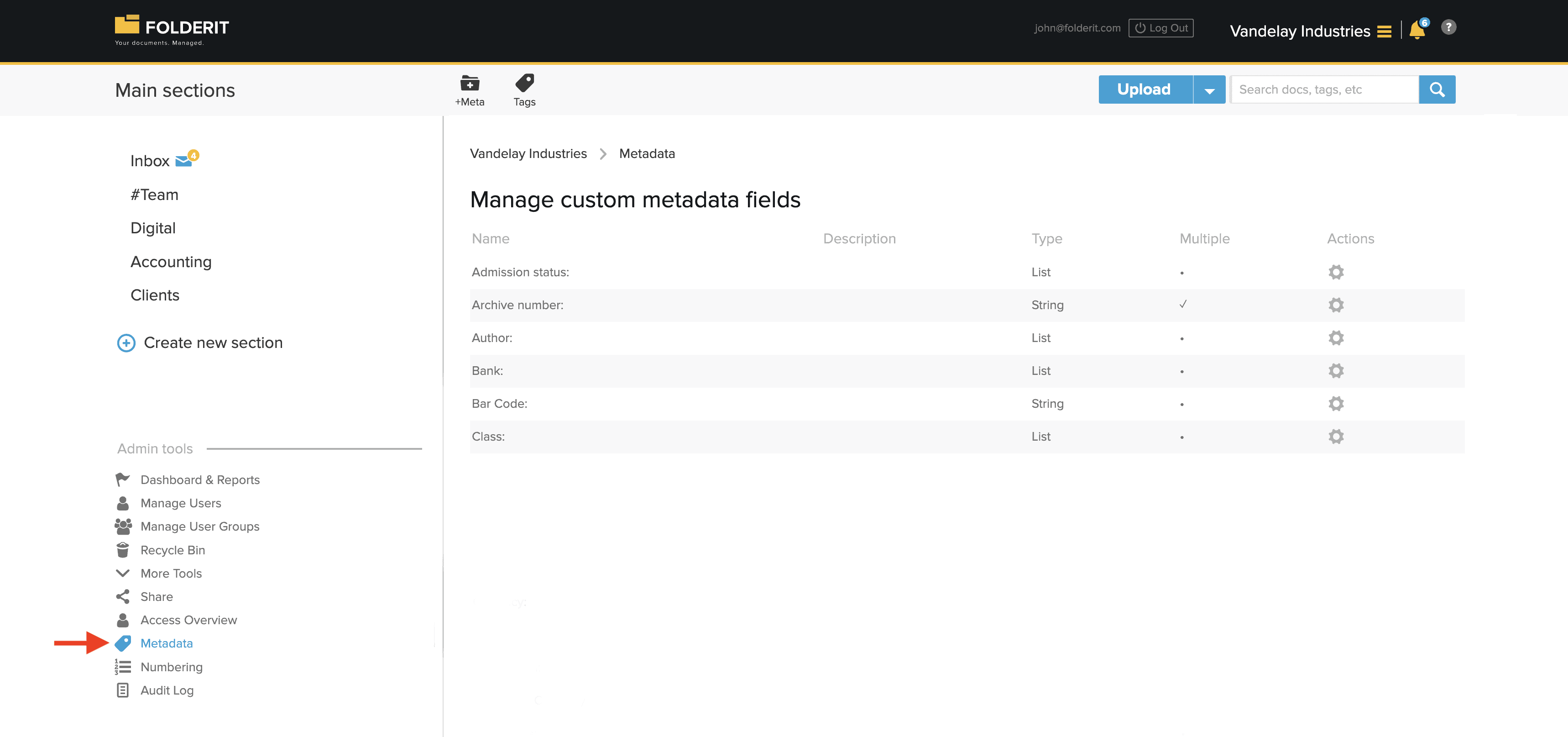
Click the gear icon beside a field to open its available actions.
Edit a custom metadata field
Select Edit to change the field’s name or other available settings.
Changing the name of a centrally defined field also changes its displayed name everywhere the field is already used.
Delete a custom metadata field
Select Delete to remove the field from the system.
Important: deleting a custom metadata field removes it from every file, folder, external link, and folder template where it is currently used. Confirm that the field and its stored values are no longer needed before deleting it.
Use custom metadata
Once a custom field has been added to a resource, users can enter or update its value by opening the item and clicking Modify.
Custom metadata values can also be displayed as folder columns and used to refine searches. See: