Sharing with Public Links
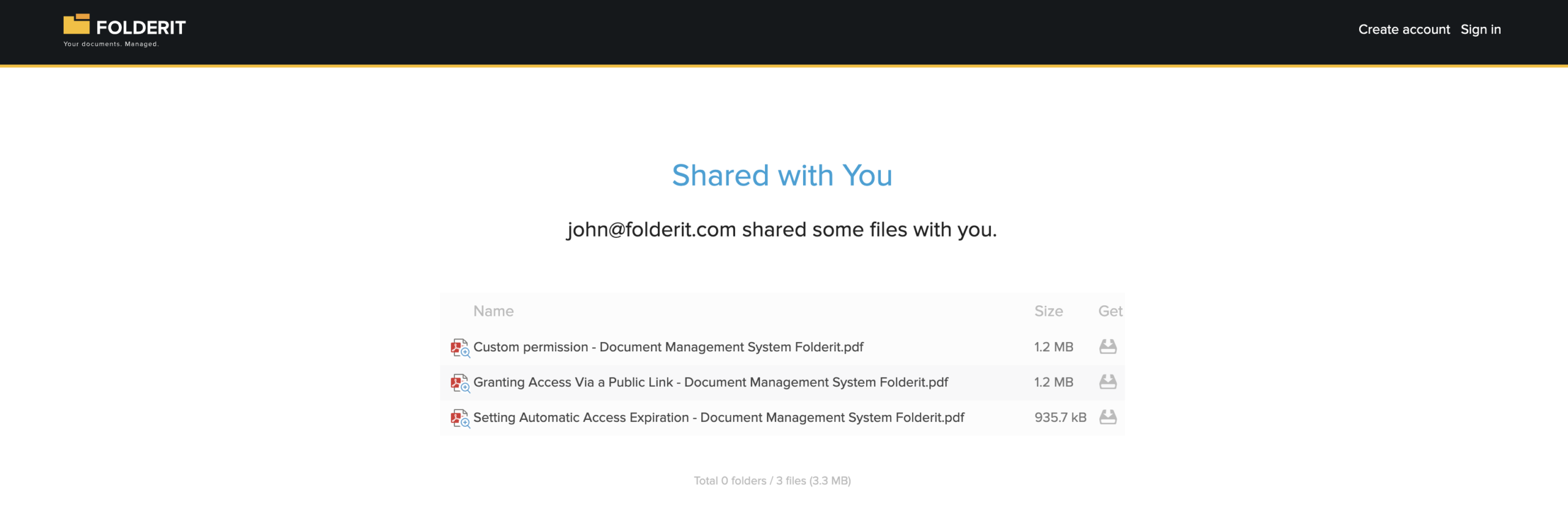
A public link lets anyone who knows the unique URL access a shared file or folder without creating a Folderit account or signing in.
Public links are useful when you need to distribute documents through email, messaging applications, a website, or another external channel. This feature is not available on the Trial plan.
Public-link access is read-only. Anonymous visitors cannot modify metadata, upload new versions, delete resources, or change sharing settings.
Create a public link
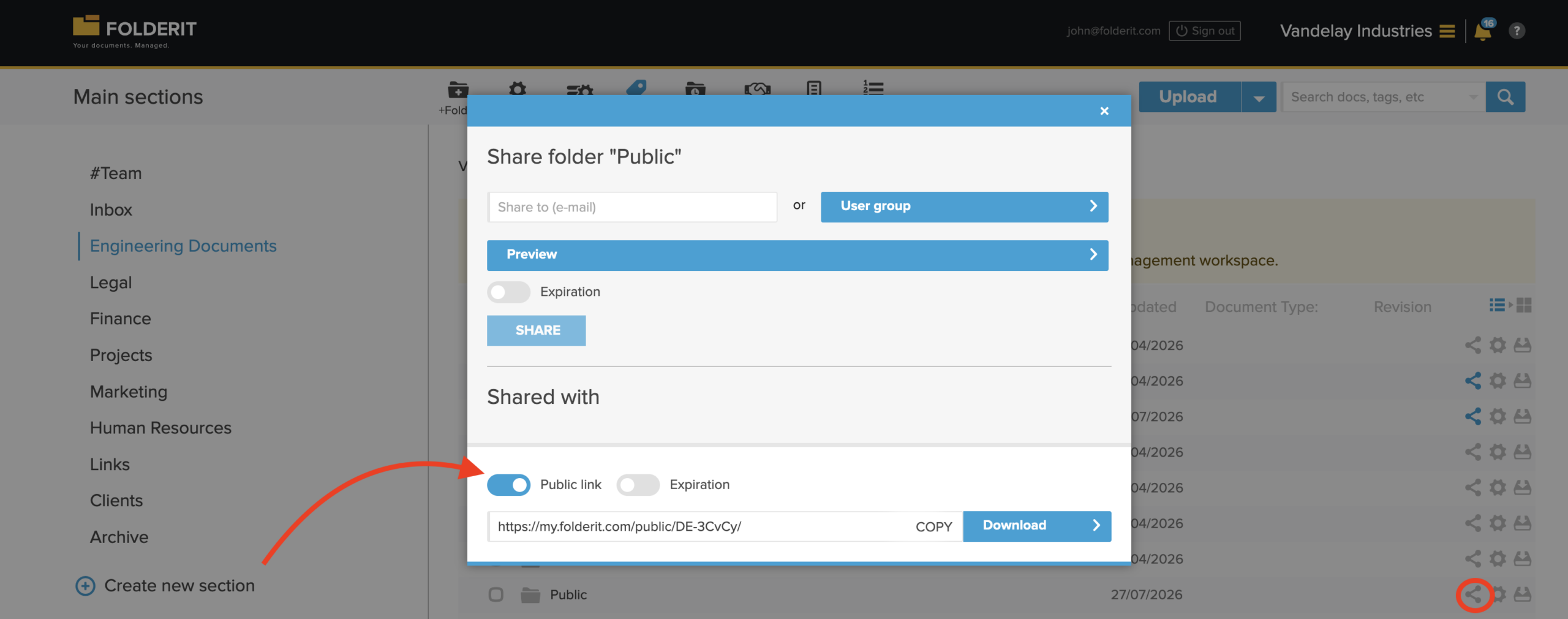
- Open the sharing window for the file or folder.
- Enable the Public link option.
- Copy the generated URL.
- Send or publish the link through your preferred channel.
For general instructions on opening the sharing window, see Sharing Files, Folders, and Other Resources.
Public links for files
A public file link allows anyone with the URL to access the shared file without signing in.
- The visitor can preview the file when a supported preview is available.
- The visitor can download the file.
- The visitor cannot edit or delete the file.
Public links for folders
A public folder link allows anyone with the URL to access the downloadable contents of the folder.
Anonymous visitors cannot modify the folder, upload files, delete content, or change its metadata or access settings.
Set an expiration date
You can set a date and time when the public link should stop working automatically.
- Open the resource’s sharing window.
- Enable Public link.
- Enable Expiration.
- Select the date and time when access should end.
For more information about timed access, see Setting Access Expiration.
Disable or replace a public link
To stop public access immediately, open the sharing window and turn the Public link option off.
Each time you disable a public link and enable it again, Folderit creates a new unique URL. The previous public link no longer works.
This is useful when a link has been shared with the wrong recipient or should no longer remain active.
Public-link activity in the Audit Trail
Folderit records public-link activity in the resource’s Audit Trail, including the IP address used to preview or download the resource.
Because public-link visitors are not signed in, the audit entry identifies the access by technical information such as the IP address rather than by a Folderit user account.
Public link versus internal Folderit link
A public link and the normal URL shown in your browser serve different purposes.
| Link type | Who can use it? | Sign-in required? |
|---|---|---|
| Public link | Anyone who knows the unique URL | No |
| Internal Folderit URL | Registered users who already have permission to the resource | Yes |
To share an internal link, copy the URL from your browser’s address bar. The same internal URL works for every registered user who already has access to the resource.
Public-link security recommendations
- Share public links only with the intended recipients.
- Use an expiration date for temporary access.
- Disable the link when it is no longer needed.
- Regenerate the link if you believe the previous URL has been exposed.
- Use normal Folderit user sharing instead when identity-based access and permissions are required.