Simple, Secure HR File Management
HR Document Management System Software
HR Document Management Features

Secure Employee File Repository

Granular Access Permissions

Fast Search with Metadata and OCR

Onboarding Document Management
Approval and Acknowledgement Workflows

Retention Rules and Audit Trails
Version Control for HR Documents
Easy HR Digitization
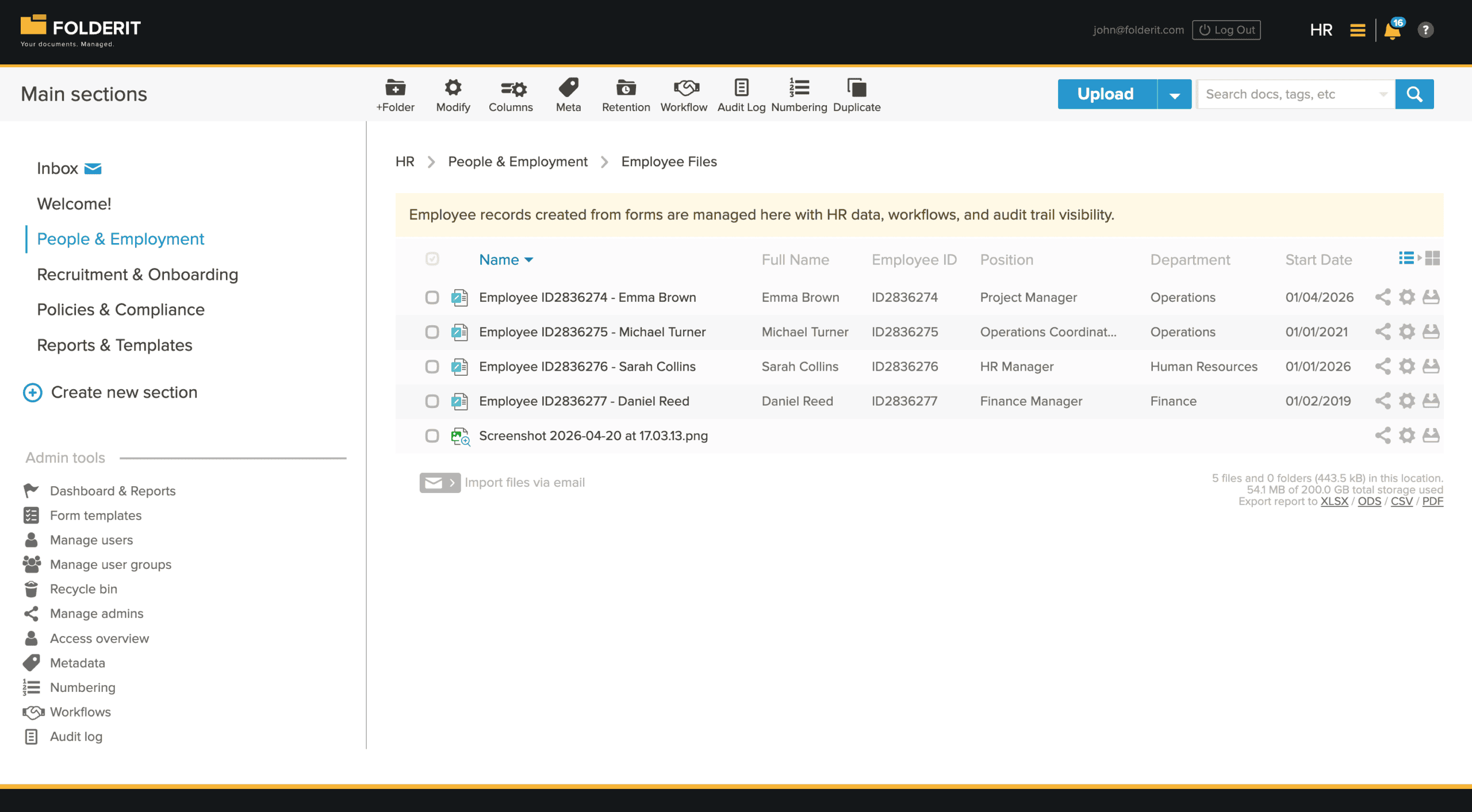
One secure system for employee records
HR teams handle some of the most sensitive documents in any organisation. Employee records, onboarding forms, payroll-related documents, performance reviews, contracts, policy acknowledgements, and disciplinary records all need to stay organised, protected, and easy to retrieve when needed. A human resources document management system replaces scattered folders, paper archives, and inconsistent shared drives with one structured digital repository for the full employee file lifecycle.
With Folderit, HR can keep personnel documentation in one secure place while controlling exactly who is allowed to see, edit, download, or approve specific files. This is especially important when working with confidential employee information and other sensitive HR records that should never be broadly accessible. Folderit supports the kind of strict access control HR document management requires.
A central HR document repository also makes day-to-day work much faster. Instead of searching across email attachments, local folders, or old filing cabinets, your team can find the right file quickly by employee name, department, document type, or other metadata. OCR also helps make scanned HR files searchable, which is especially useful when older paper records have been digitised into PDFs or image-based files.
Whether you are building structured employee files from day one or digitising an existing archive, Folderit gives HR teams a practical and secure way to manage records throughout onboarding, active employment, and offboarding. It brings together security, accessibility, and control without making everyday HR work more difficult.
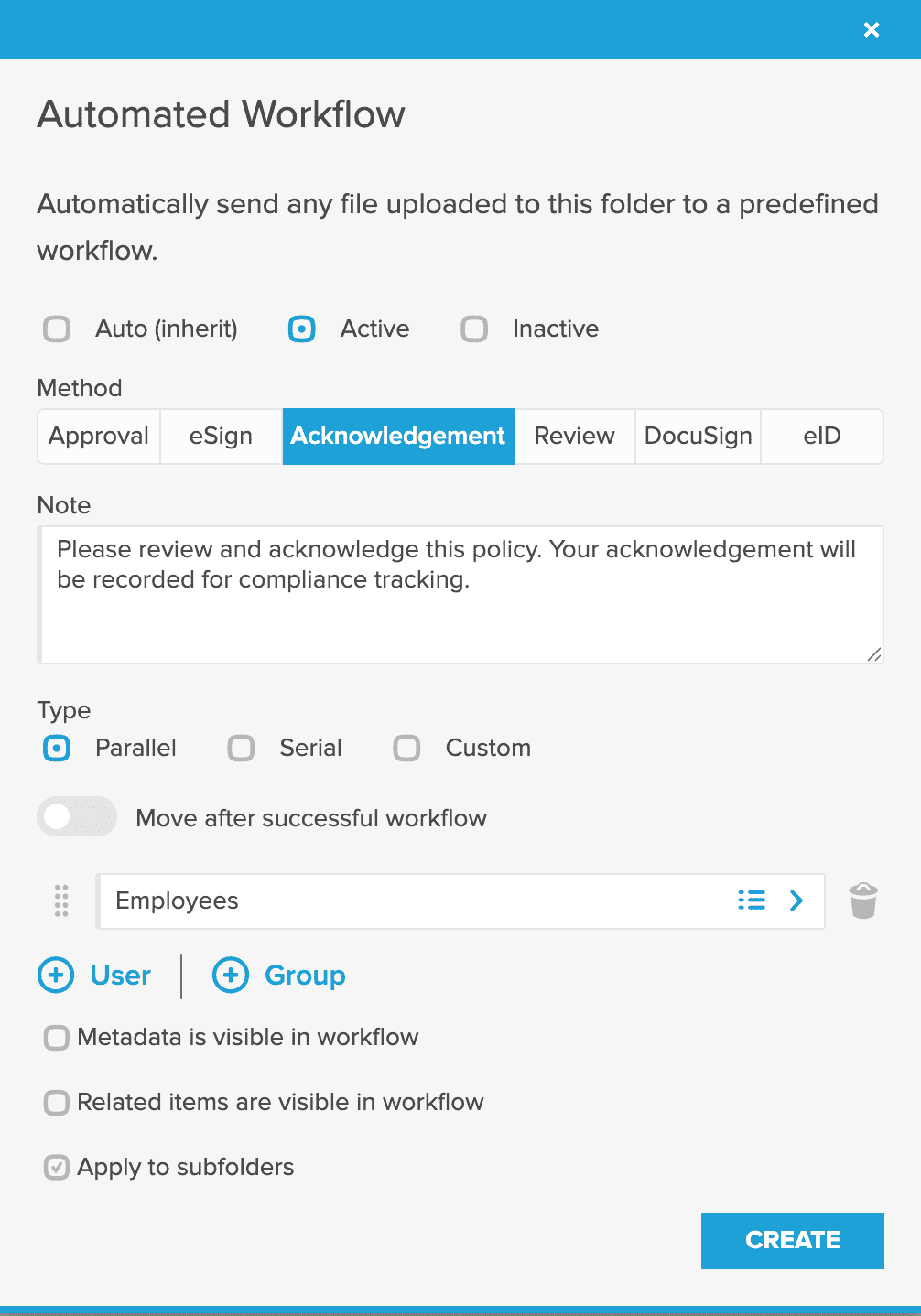
Structured onboarding and policy workflows
HR document management is not only about storage. It is also about making sure the right documents reach the right people at the right time. New hire onboarding often includes offer letters, employment contracts, NDAs, policy acknowledgements, equipment handover forms, and onboarding checklists. When these are handled through email threads and shared folders, information gets missed, files are stored inconsistently, and HR teams waste time chasing signatures and confirmations.
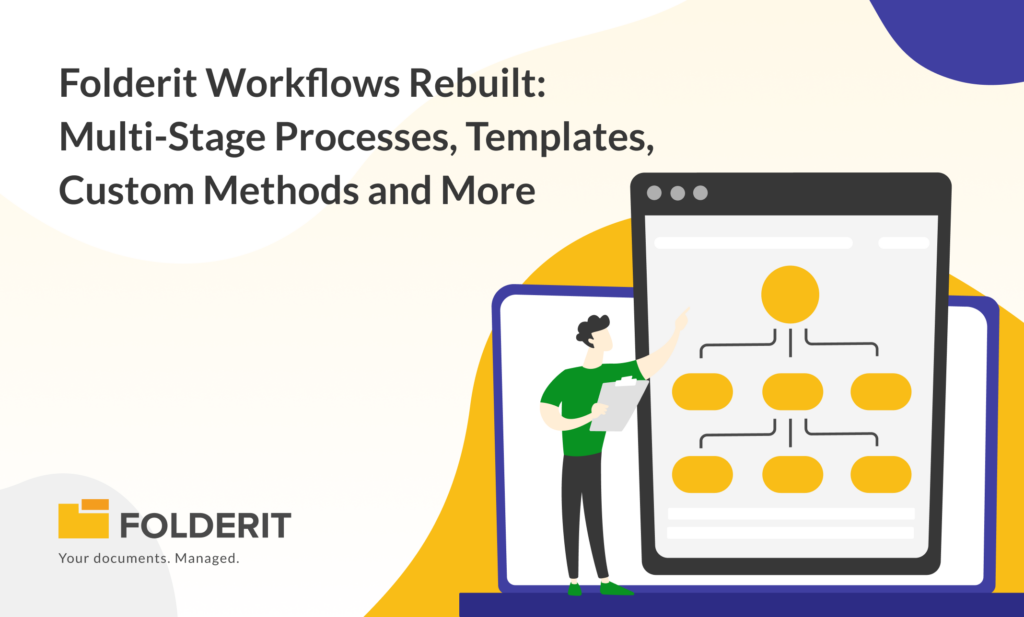
Folderit helps HR teams turn these recurring processes into structured workflows. Documents can be routed for approval, review, signing, or acknowledgement so that each step is visible and controlled. This is especially useful for onboarding packs, internal policy updates, and employee confirmations where accountability matters and proof of completion must be easy to show later.
Instead of building HR administration around disconnected files, teams can standardize how documents are created, named, shared, approved, and archived. That reduces delays, improves consistency, and makes onboarding much easier to manage at scale. It also helps ensure that signed or acknowledged documents end up in the right employee file with the right permissions from the beginning.
Whether you are distributing onboarding documents, updating HR policies, or collecting acknowledgements from staff, Folderit gives you a practical way to keep the process organised from first draft to final storage. The result is a smoother HR workflow with less manual follow-up and much better control over sensitive records.
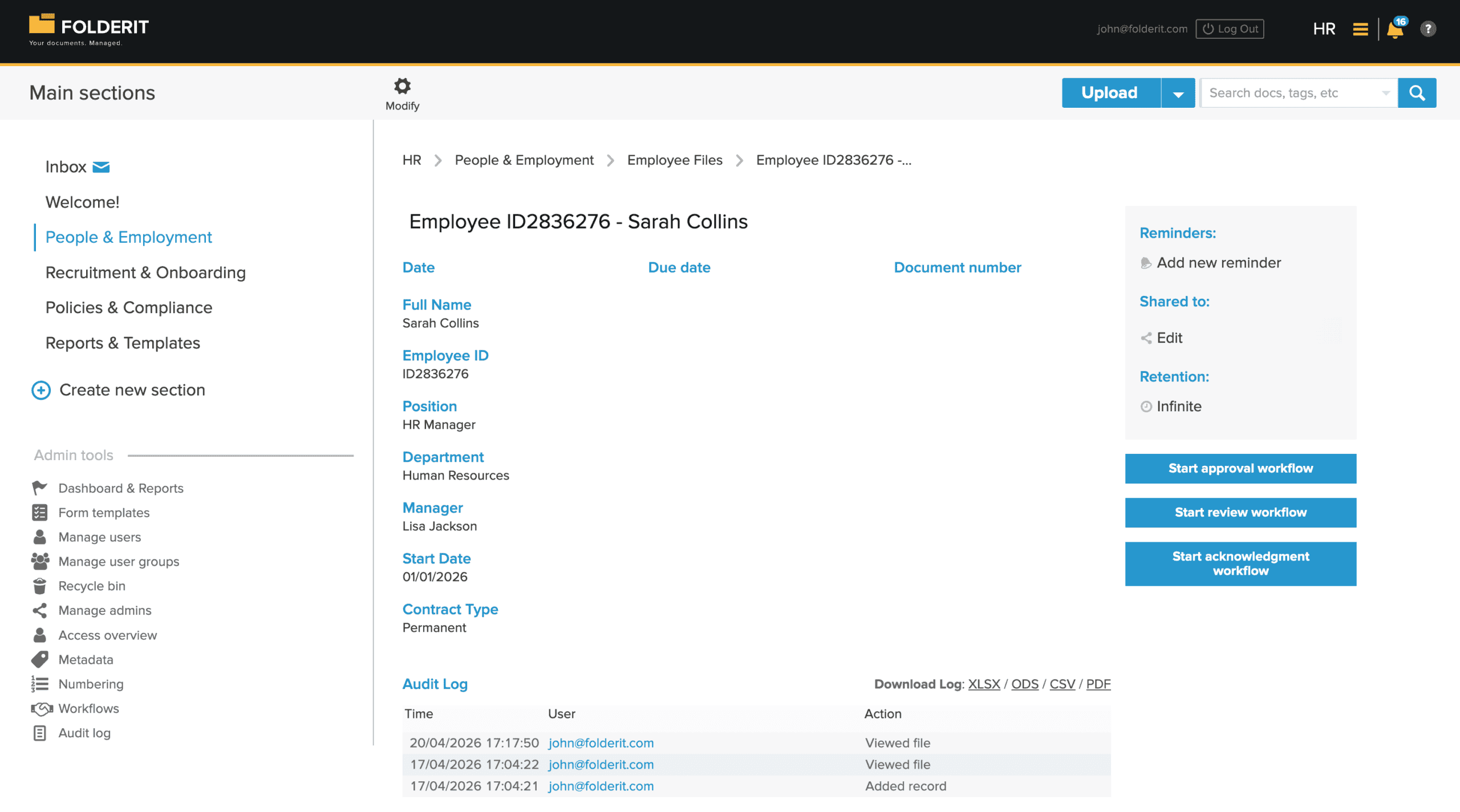
Compliance, retention, audit trail, and fast HR search
Human resources teams deal with documents that carry legal, operational, and privacy risk. Employee records may include personal data, payroll and benefits documents, contracts, medical information, performance records, disciplinary documentation, and policy history. A proper HR document management system helps keep these records secure, well-structured, and easier to manage in line with internal rules and external requirements.
Compliance becomes much easier when records are stored in one controlled system instead of being split between filing cabinets, inboxes, desktops, and old shared drives. Folderit supports role-based access, encryption, version history, and audit trails so HR teams can better control who sees what, who changed what, and when something was viewed, approved, or updated. That level of visibility is especially important for sensitive employee files and policy-controlled records.
Retention is another key part of HR document management. Different document types often need to be kept for different periods, and the longer a company grows, the harder that becomes to manage manually. Folderit helps HR teams apply retention rules and maintain a cleaner, more defensible recordkeeping process, reducing the chance that important files are deleted too early or kept in the wrong place without oversight.
Fast retrieval also matters. HR should be able to find the right file by employee name, role, department, date, or document type without digging through folders for minutes at a time. Metadata helps structure records in a meaningful way, while OCR makes scanned files searchable too. This is especially useful for older HR archives that were digitised from paper and still need to remain usable in daily work.
The result is a more reliable HR document environment: easier to search, easier to control, and easier to defend when questions come up later. For growing businesses, that means less friction in daily HR work and much stronger control over compliance-sensitive records across the full employee lifecycle.
What our customers say
FAQs
An HR document management system is a secure digital system for storing, organizing, searching, and managing employee-related documents. It helps HR teams manage employee records, onboarding files, HR policies, contracts, payroll documents, performance reviews, and other sensitive personnel files in one structured repository.
Folderit helps you manage employee records, onboarding documents, offer letters, employment contracts, policy acknowledgements, payroll and benefits files, performance reviews, disciplinary records, training documents, and other confidential HR files. You can organize them with folders, metadata, search, workflows, and retention rules.
Yes. Folderit lets HR teams route documents through approval, review, signing, and acknowledgement workflows. This is useful for onboarding packs, internal HR policies, employee confirmations, and other recurring HR processes where timing, accountability, and proof of completion matter.
Folderit helps protect sensitive HR records with encryption, granular access permissions, audit trails, and controlled sharing. You can define who is allowed to view, edit, download, approve, or acknowledge specific documents, which is especially important for confidential employee and payroll-related information.
Yes. Folderit helps HR teams apply retention rules, keep version history, and maintain audit trails for employee-related documents. This makes it easier to manage records in a structured way, support internal policies, and stay better prepared for audits, compliance checks, or internal investigations.
Yes. Folderit combines metadata-based organization with OCR-powered search, helping HR teams find the right document by employee name, department, date, document type, or other details. This is especially useful when older HR files have been scanned from paper into PDFs or image-based documents.
Yes. Folderit is well suited for onboarding document management, including offer letters, employment agreements, NDAs, policy acknowledgements, equipment handover forms, and onboarding checklists. HR teams can keep the whole onboarding document flow organized from preparation and approval to signing and archive.