Construction projects generate vast volumes of document: blueprints, contracts, RFIs, submittals, change orders, safety compliance records, and countless revisions. Keeping these organised, accessible, and audit-ready can quickly spiral into a coordination nightmare. Without a structured document management system (DMS), your team wastes hours chasing down the latest version, navigating messy shared drives, and managing duplicate files across emails and disconnected platforms.
A robust document management system (DMS) for construction solves these challenges by:
- Centralising document storage
- Enforcing version control
- Automating approval workflows
- Enforcing access permissions, ensuring the right people always have access to the right files, whether they’re in the office or on site
The best construction document management systems combine cloud-based accessibility with mobile-friendly interfaces, strong security, and seamless integrations to keep projects on track and compliant.
Below, we’ve analysed the top document management systems for construction software, comparing their features, strengths, and ideal use cases to help you choose the best fit for your team.
Quick List
- Folderit: Best Overall and Ease of Use
- Procore: Best for All‑in‑One Project Management
- Autodesk Construction Cloud: Best for BIM‑Centric Teams
- Bluebeam Revu: Best for PDF Markups and Design Review
- Fieldwire: Best for Mobile-First Field Collaboration
- Buildertrend: Best for Residential and Light Commercial Construction
- Oracle Aconex: Best for Enterprise Document Control for Large-Scale Projects
1. Folderit – Best Overall and Ease of Use
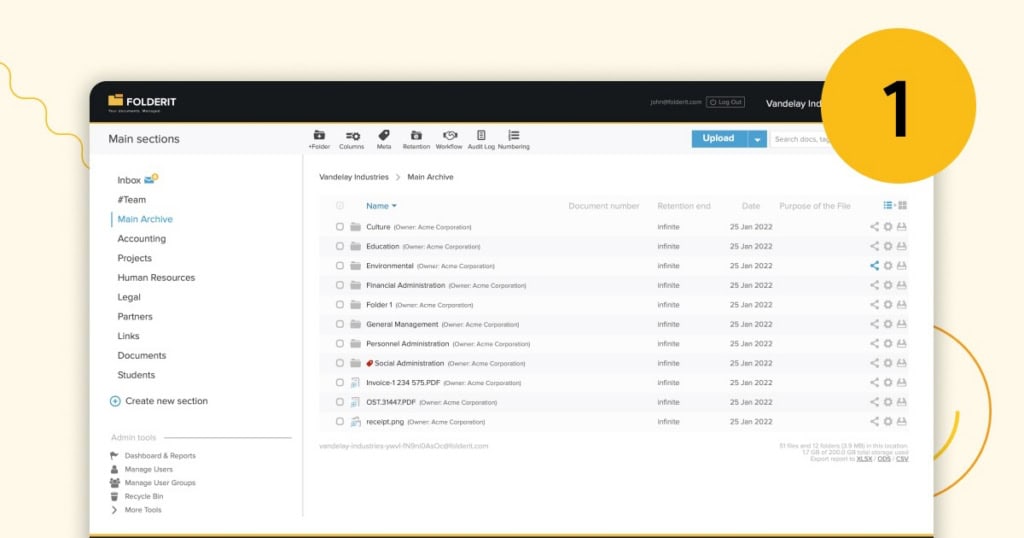
Folderit provides a comprehensive, enterprise-grade document management system designed for organisations that prioritise security, compliance, and ease of use. It’s equally well-suited for construction companies managing large project portfolios, contracts, and regulatory documentation as it is for small teams looking to eliminate file-sharing chaos.
Key Features:
- 256-bit encryption, ISO 27001, GDPR, and HIPAA compliance for secure document storage
- Unlimited version history with automatic tracking of all edits
- Custom approval workflows and electronic signatures for contracts and submittals
- Advanced OCR content indexing for fast, full-text search across scanned documents
- Role-based access permissions (preview-only, upload-only, editor) with full audit trails
- Integration with MS Entra ID, Okta, and Google SSO for streamlined access management
- Triple backups across multiple data centres ensure business continuity
Best For: Construction firms of any size that require strict document control, particularly those handling sensitive contracts, regulatory compliance (e.g., health and safety), and cross-team collaboration. Folderit’s combination of robust security, intuitive user interface, and powerful automation tools make it an excellent choice for document controllers and project admins who need to reduce manual coordination while maintaining compliance.
2. Procore – Best for All‑in‑One Project Management
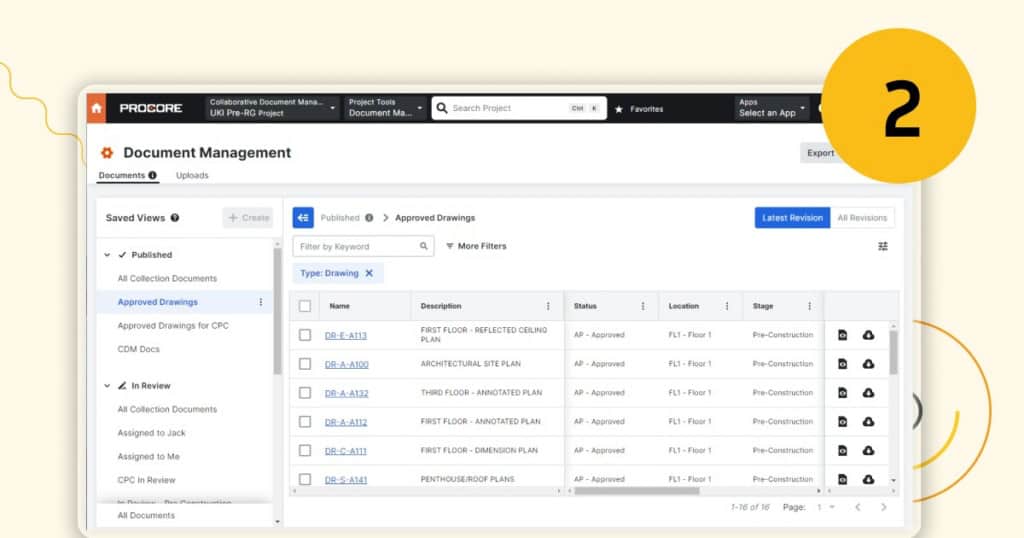
Procore is a dominant, enterprise-grade platform that combines document management with full project and financial management capabilities. It’s designed for general contractors and subcontractors managing large-scale commercial projects.
Key Features:
- Unlimited document storage with sophisticated role-based access control
- AI-driven RFI and submittal automation
- Strong mobile apps for field teams with offline access
- Deep integration with Primavera, Autodesk, and major ERP systems
- Real-time collaboration and project communication tools
Best For: Mid-to-large general contractors and construction managers running complex, multi-stakeholder projects that require comprehensive project management functionality alongside document control. Procore’s scalability and extensive integration ecosystem make it ideal for teams that need end-to-end visibility across project documentation, budgets, and schedules.
3. Autodesk Construction Cloud (ACC) – Best for BIM‑Centric Teams
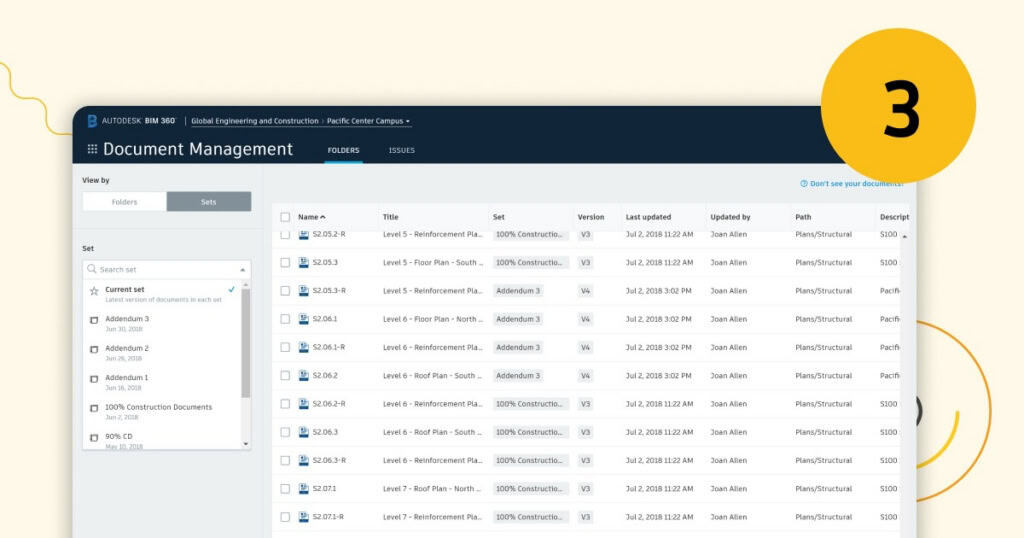
Formerly known as BIM 360, Autodesk Construction Cloud excels at design-heavy and BIM-integrated workflows. It connects 2D drawings and 3D models in a single platform, bridging the gap between design and construction teams.
Key Features:
- ISO 19650 compliant for UK BIM standards
- Native support for 3D model viewing and coordination (Revit, Navisworks, AutoCAD)
- Advanced version control and revision tracking
- Drawing markup and issue management tied to models
- Strong integration with the Autodesk ecosystem
Best For: Construction firms working on design-build projects, infrastructure, or any project requiring tight integration between BIM workflows and document management. ACC is particularly suited for teams already using Autodesk design tools who need a seamless link between CAD/BIM environments and the field.
4. Bluebeam Revu – Best for PDF Markups and Design Review
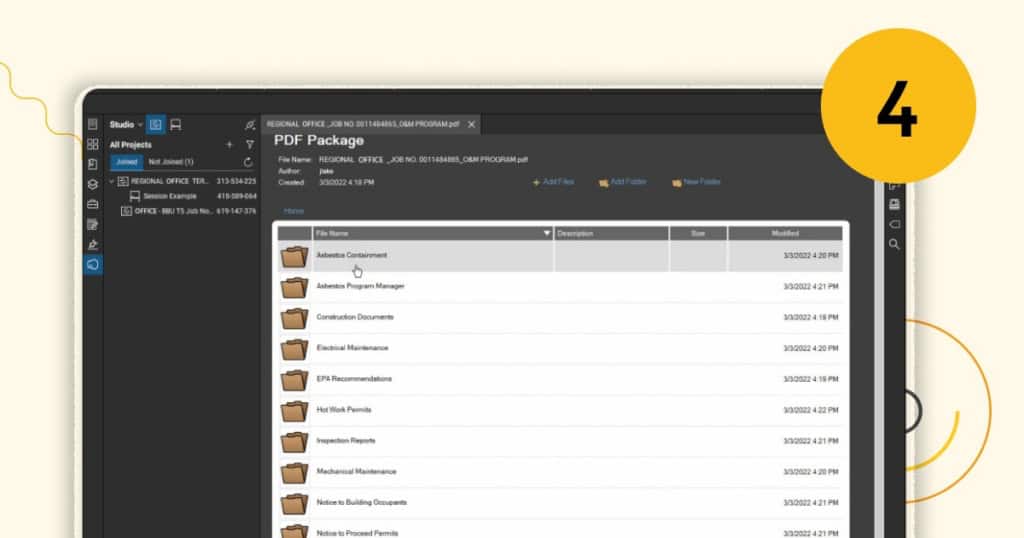
Bluebeam Revu is a specialised tool for managing and marking up PDFs, particularly drawings, specifications, and submittals. While it’s not a full project management system, it’s indispensable for plan review, estimating, and document comparison workflows.
Key Features:
- Advanced PDF markup, annotation, and measurement tools
- Studio collaboration for real-time document review sessions
- Document comparison (overlay and side-by-side) for tracking drawing revisions
- Integration with Procore, ACC, and other construction platforms
- Desktop and cloud-based deployment options
Best For: Estimators, project managers, and design teams who need unparalleled PDF editing and markup capabilities for blueprints, shop drawings, and specifications. Bluebeam works best when paired with a broader construction management platform like Procore or ACC.
5. Fieldwire – Best for Mobile-First Field Collaboration
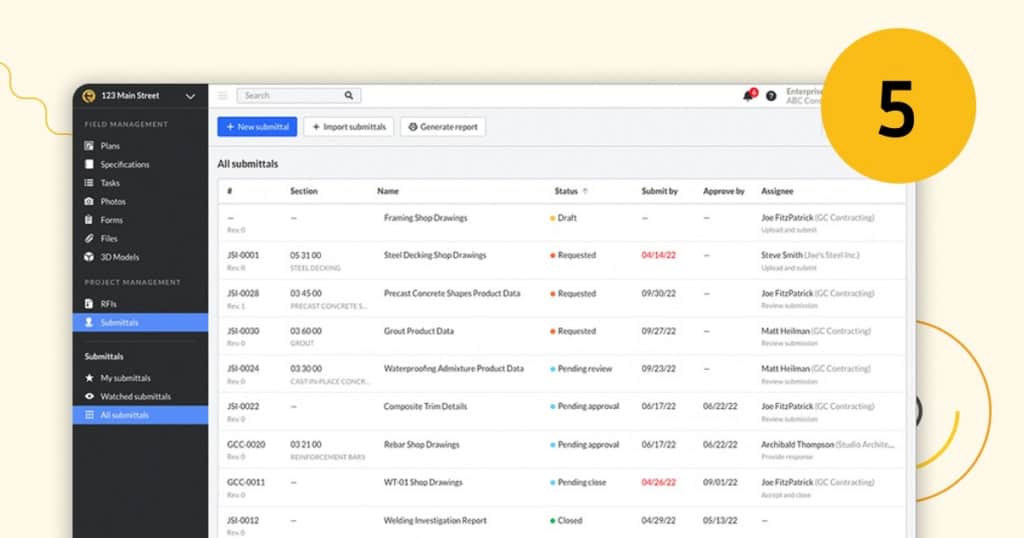
Fieldwire bridges the gap between the office and the job site, with a mobile-first interface built for superintendents, foremen, and field crews. It focuses on making blueprints, punch lists, and issue tracking effortless on tablets and smartphones.
Key Features:
- Blueprint digitising with plan viewing and markup on mobile devices
- Task management and punch list workflows
- Issue tracking with photo attachments and location tagging
- Offline access for plans and forms
- Intuitive, easy-to-learn interface for field users
Best For: Site managers and superintendents who need fast, mobile access to current drawings and task lists. Fieldwire is ideal for smaller to mid-sized projects where field coordination and punch-list management are top priorities.
6. Buildertrend – Best for Residential and Light Commercial Construction
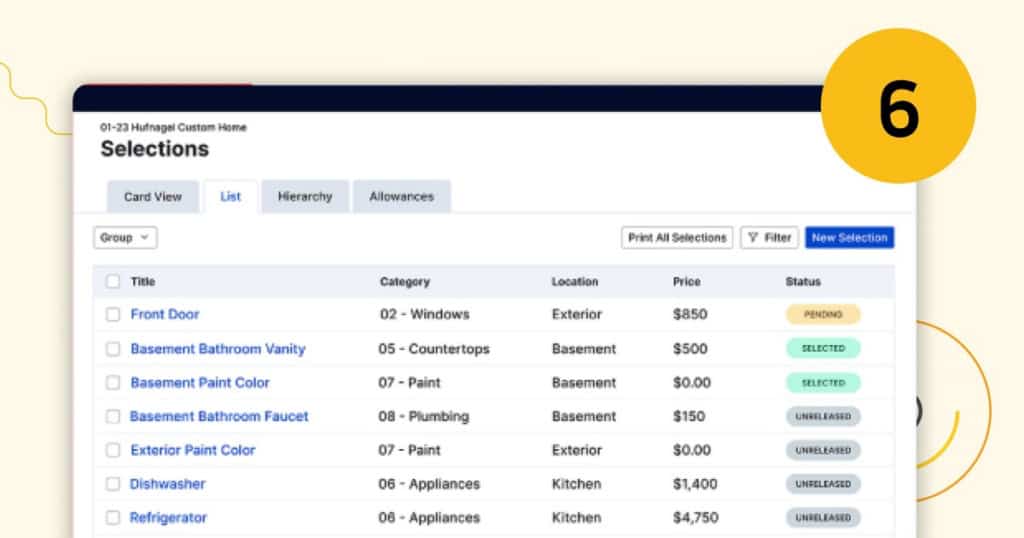
Buildertrend is tailored for home builders, remodellers, and light commercial contractors. It combines document management with scheduling, client communication, and project financials—all in one user-friendly platform.
Key Features:
- Document storage with project scheduling and daily logs
- Client portal for sharing updates, selections, and change orders
- Built-in CRM and lead management
- Customisable forms and templates for residential workflows
- Real-time collaboration with subcontractors and homeowners
Best For: Residential builders, custom home contractors, and remodelling companies that need an all-in-one platform emphasising client communication and scheduling alongside document control.
7. Aconex (Oracle) – Best for Enterprise Document Control for Large-Scale Projects
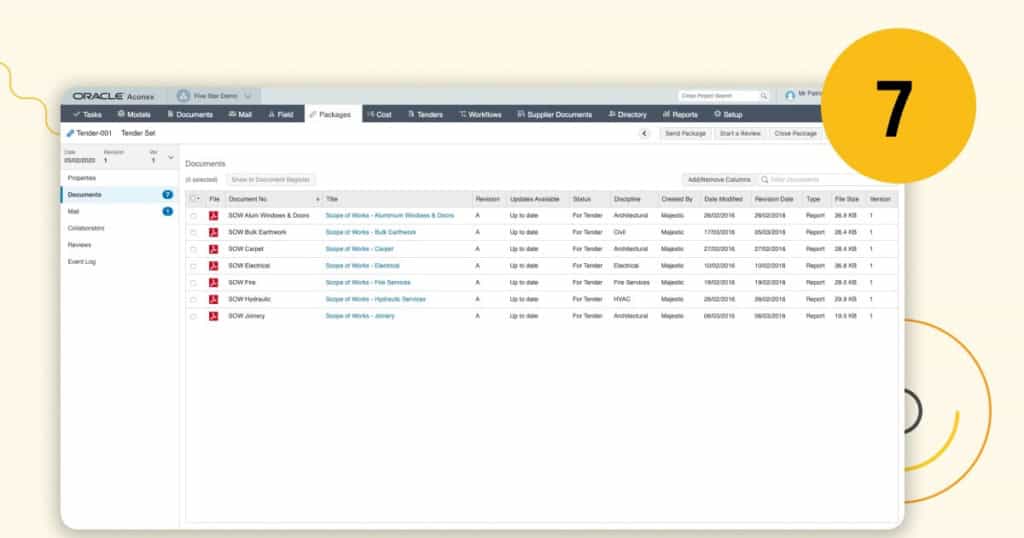
Aconex (now part of Oracle’s construction portfolio) is designed for the largest, most complex construction and infrastructure projects. It focuses on strict document control, workflow automation, and managing enormous volumes of project correspondence.
Key Features:
- Centralised document repository with sophisticated access control
- Automated workflows for approvals, transmittals, and RFI routing
- High-volume data management and reporting capabilities
- Enterprise-level security and compliance features
- Integration with Oracle Primavera and ERP systems
Best For: Large general contractors, engineering firms, and infrastructure owners managing mega-projects (e.g., airports, highways, power plants) where rigorous document control, audit trails, and workflow governance are mission-critical.
What to Look for in Construction Document Management Software
When evaluating the top construction document management systems, keep these essential features and considerations in mind:
- Version Control & Revision Tracking: Ensuring teams always work from the latest approved documents prevents costly mistakes. Look for automatic versioning with clear audit trails and change history.
- Mobile Access: Field teams need instant access to blueprints, specifications, and RFIs on tablets and smartphones, even offline.
- Security & Compliance: Construction documents often include sensitive financial and contractual data. Prioritise platforms with encryption, role-based permissions, and compliance certifications (ISO 27001, GDPR, SOC 2).
- Integrations: Your DMS should connect seamlessly with design tools (AutoCAD, Revit), accounting systems, and other project management platforms.
- Approval Workflows: Automated routing for submittals, change orders, and RFIs reduces manual chasing and speeds up decision-making.
- Search & Retrieval: OCR indexing and metadata tagging enable teams to find documents instantly, even across thousands of files.
Final Thoughts
Choosing the best document management system for construction depends on your project size, workflow complexity, and existing technology stack. For large-scale commercial projects with extensive BIM requirements, Autodesk Construction Cloud or Procore are natural choices. Residential builders will find Buildertrend’s client-focused tools more aligned with their needs, while field-heavy operations benefit from Fieldwire’s mobile-first approach.
For construction firms prioritising security, compliance, and user-friendly document control without vendor lock-in, Folderit delivers enterprise-grade capabilities at a price point accessible to companies of all sizes. Its robust version control, custom workflows, and seamless integrations make it a strong contender for any construction document controller looking to eliminate chaos and improve project outcomes.
Whichever system you choose, investing in a purpose-built document management solution will reduce manual coordination, improve compliance, and give your team the clarity and confidence they need to deliver projects on time and on budget.